
Booking.com sits under Booking Holdings, the world's leading provider of online travel and related services. As UX Team Lead for the Connected Stay Platform and BookingSuite, I led cross-brand product design across Booking.com, Kayak, Priceline, Agoda, RentalCars.com, and OpenTable. The category had never had unified experiences before.
Six brands, one vision
I joined Booking to lead UX for BookingSuite, the company's hotel services and rate intelligence platform. Booking.com later sunset BookingSuite and folded the team into a vision that had just begun taking shape: Connected Stay. That was one pillar of something much bigger. Connected Trip, Booking's vision of a future where accommodations, flights, ground transport, attractions, and dining stop living in separate silos and behave as one experience that adapts when plans change. The company had been laying that foundation since Glenn Fogel took the helm, and my team's mission became building the UX for it, starting with the stay itself.
The "Connected Stay" initiative was ambitious: create a seamless experience around the stay, before, during, and after, and not just for hotels but for home rentals and every other property type. It had to work across six distinct brands with different audiences, design languages, and business models. Most cross-brand initiatives fail because someone eventually has to pick a winner. We had to build for all of them.
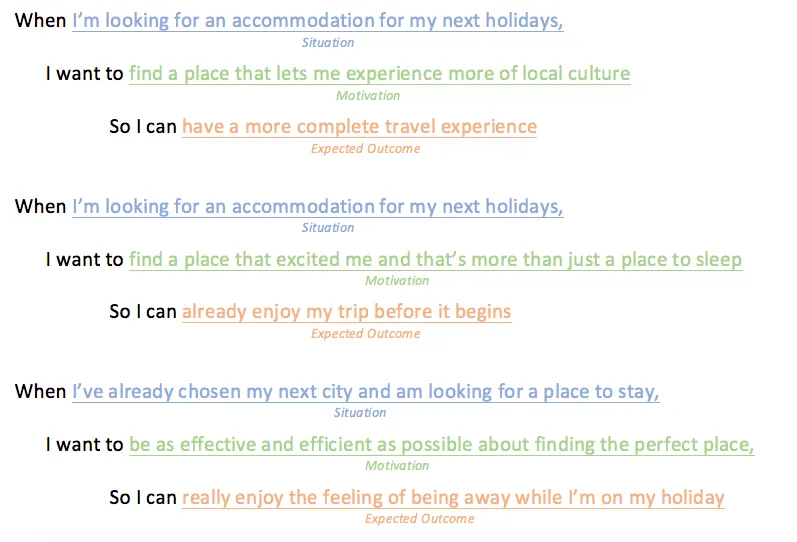
The friction we were trying to design out wasn't hypothetical. Earlier at Booking, I ran guerrilla usability testing on the core product with a cross-functional pod: researcher Bram Krommenhoek, three other researchers, a copywriter, and two product managers. We were mentored by my manager at BookingSuite at the time, Cale Kennedy, then Manager of Software Development, who led 10 multidisciplinary teams across BookingSuite's direct-channel SaaS platform, three-sided hotel tech marketplace, and frictionless check-in product. Mohammad Eltayeb later stepped into that role for the rest of my time there. Bram's write-up of that work captured exactly the continuity gaps Connected Stay was later built to close: too much friction and stress before, during, and after a stay at a property.
Shared foundations, distinct surfaces
We built a modular design system for Connected Stay: shared interaction patterns, data models, and content strategy that each brand could adapt without breaking coherence. The system needed to feel native on Kayak's search-first experience and equally native on Booking.com's accommodation-focused surface.
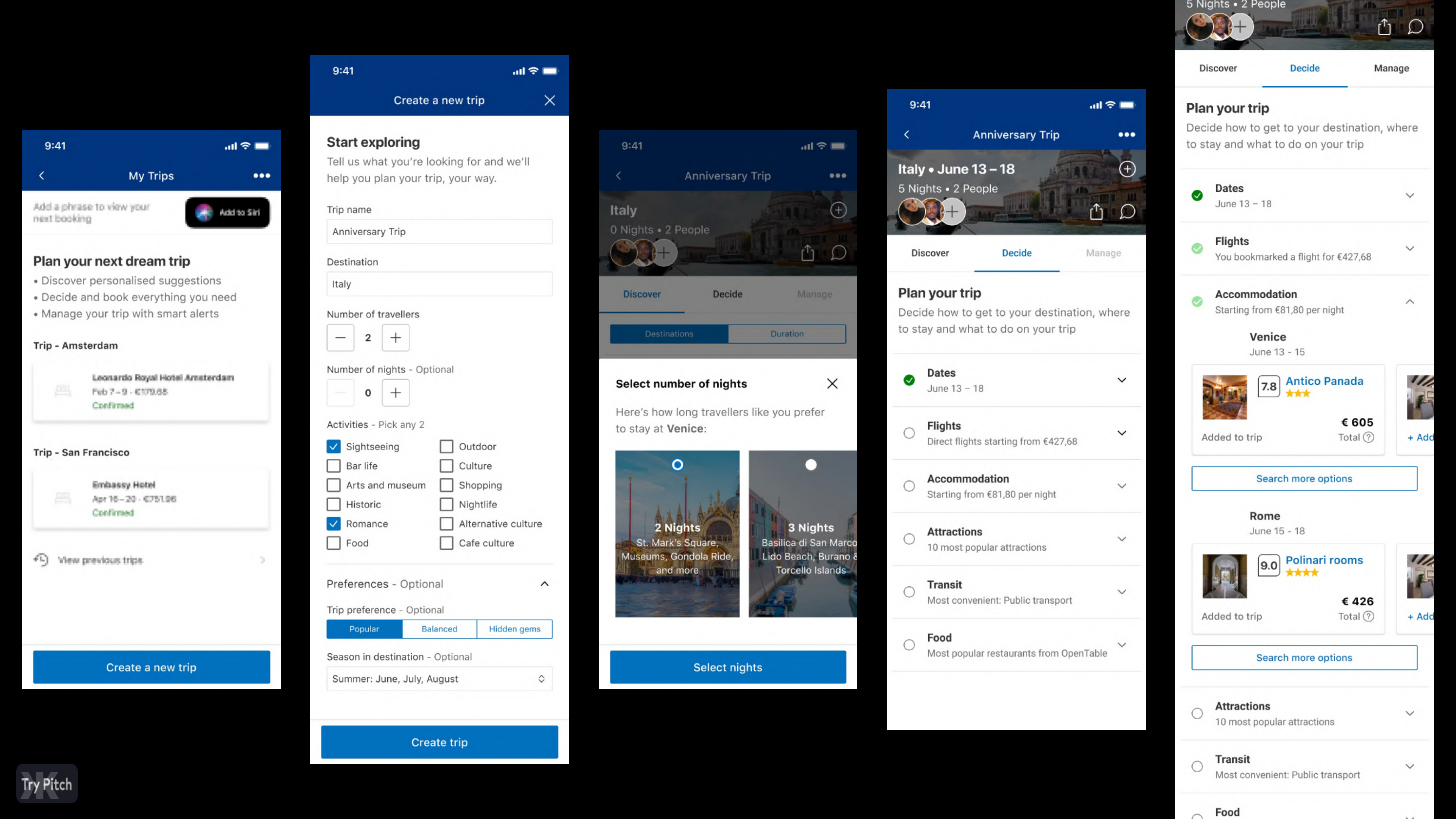
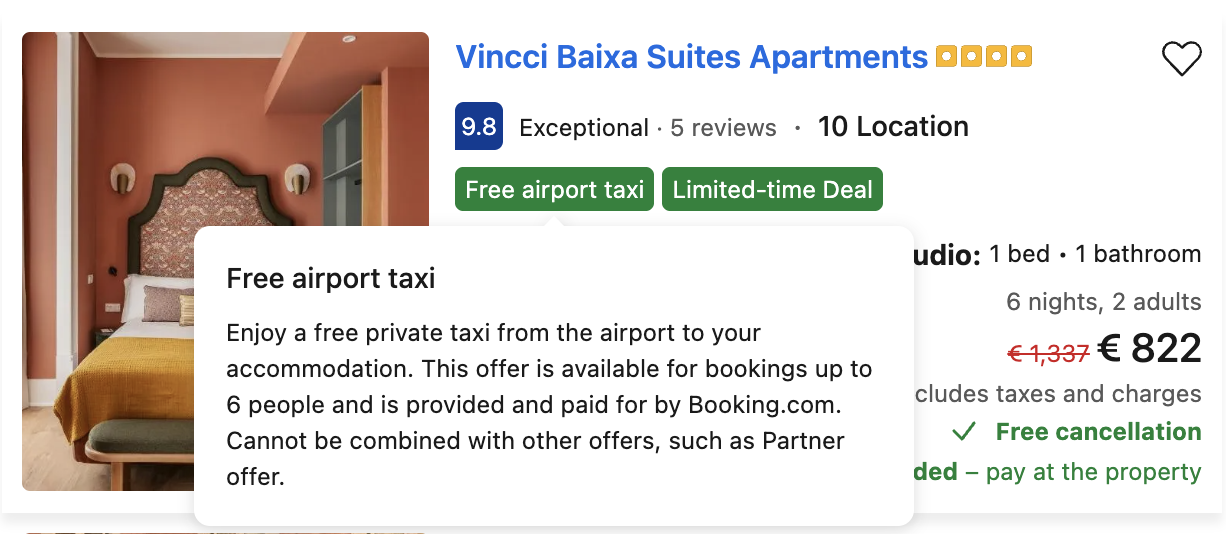
Two features show that system in practice. We designed a trip planner that let travellers set their dates, flights, and stay once and then adjust all three together, instead of juggling three separate bookings by hand. On the discovery side, we pushed Connected Stay past the room itself. Browsing a destination surfaced local attractions and live events, concerts included. Restaurant data from OpenTable, hotels from Booking.com, flights from Priceline, all pulled into a single cross-brand flow. The stay stopped being an isolated transaction and became one piece of a connected trip. ✈️
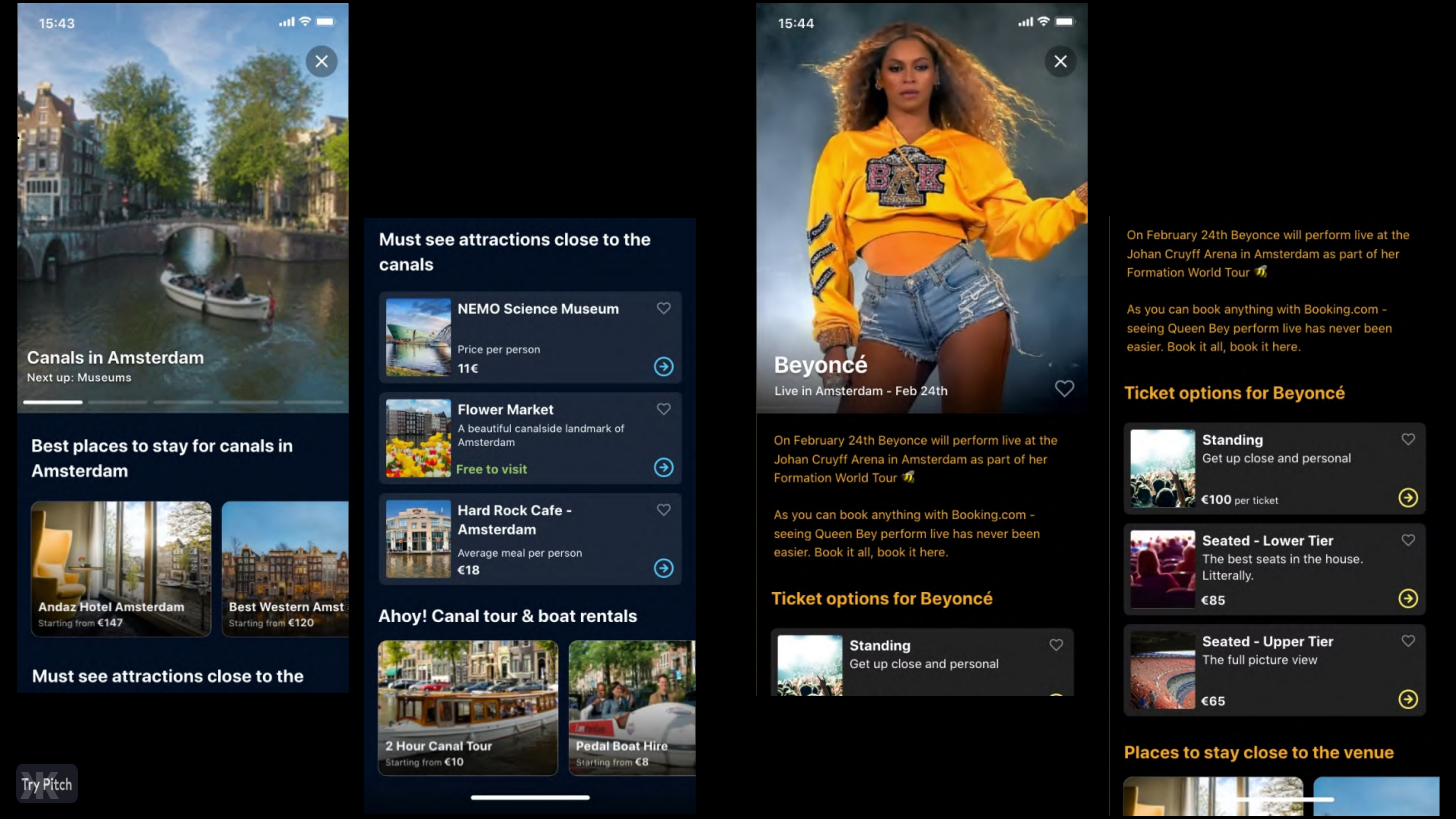
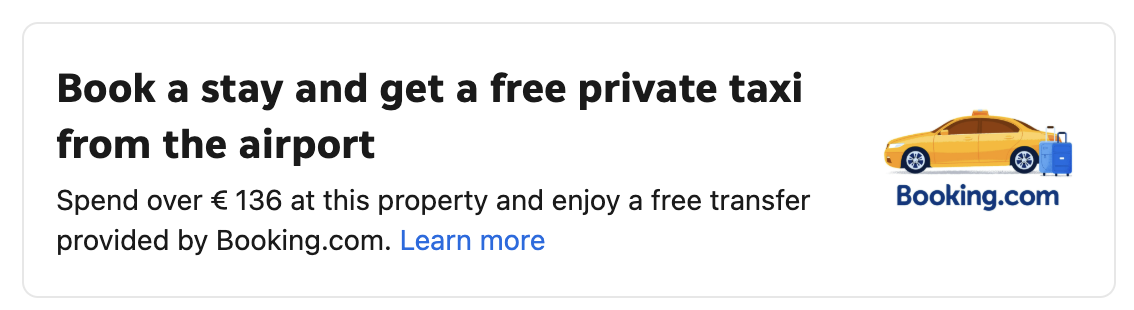
Ground transport got the same cross-brand treatment. Booking a qualifying stay unlocked a free private airport taxi, funded by Booking.com and surfaced right on the property page, turning a standalone accommodation booking into the start of a connected trip.
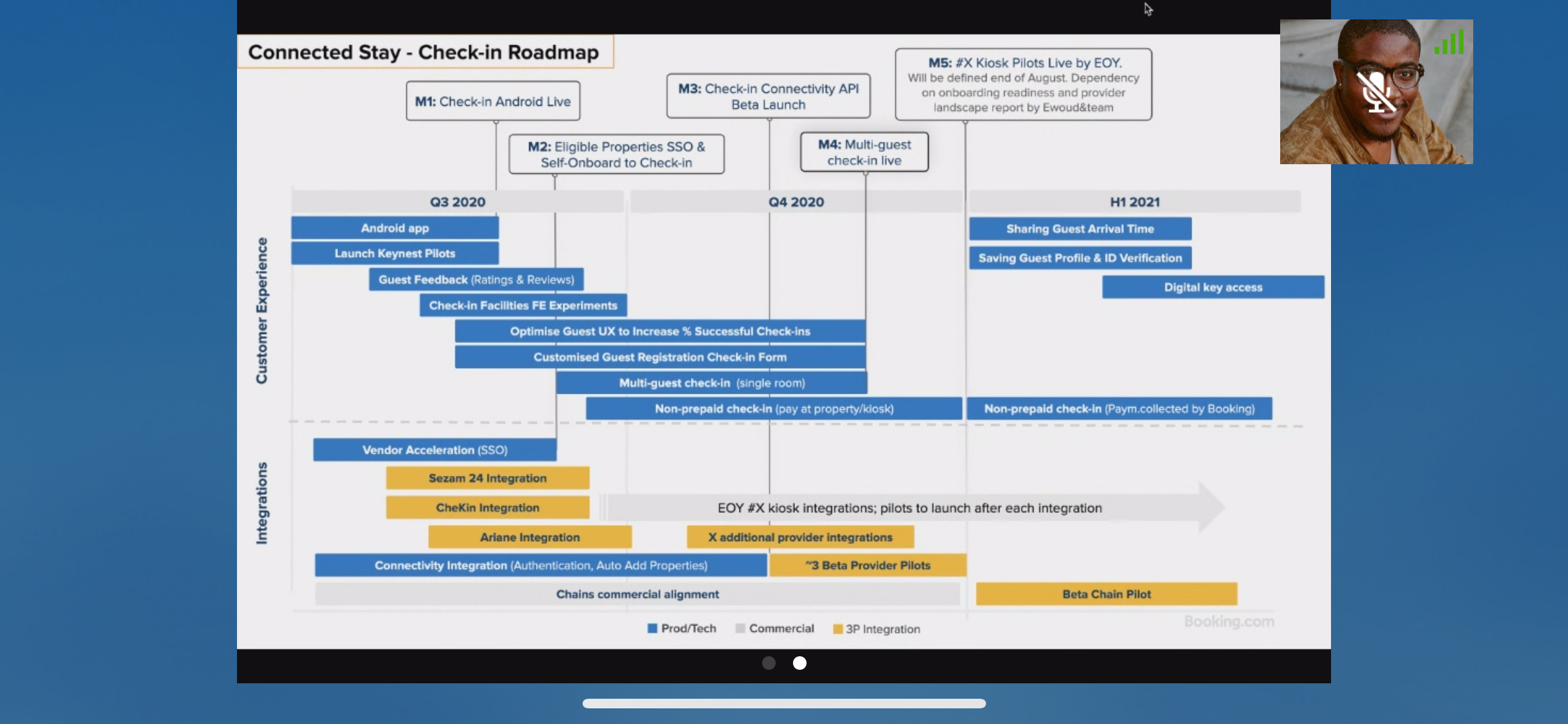
We also built a check-in experience that carried the same connected logic from airport to front door. Passport and ID collection handled ahead of arrival. Guided navigation from the airport to the accommodation. Arrival access sorted in advance, whether that meant a digital key, an entry code, or a host greeting.
We shipped two major features: a cross-brand stay communication layer (messaging, service requests) and a post-stay feedback loop that fed directly into property quality scoring. Both shipped to millions of users within the same quarter.
Then COVID hit and Booking's business cratered overnight. Working closely with my direct PM peer Bhuvan Arora and Senior UX Copywriter Hannah Weissenbuehler, I rebuilt the team into something closer to an agile startup. Scrappy, fast, shipping a stream of small experiments. The ideas came straight from our hackathons and from what customer support, partner support, and account managers for our largest properties were hearing on the ground.
Outside the core product work, I won two internal hackathons, a signal that our team was doing more than executing roadmap items: we were generating ideas the business wanted to run.
The Connected Trip kept going
My time at Booking ended in 2021 amid the pandemic's COVID-era layoffs, which cut nearly 25% of Booking Holdings' global workforce and hit travel harder than almost any other industry. Even as I was leaving, Skift was reporting that Booking Holdings saw the connected trip strategy as critical to its post-crisis growth, while being candid that the company still had "work to do on its machinery" for cross-selling multiple travel products. The vision we were building toward didn't stop. It's been vindicating to watch it become the company's flagship strategy. Booking now markets Connected Trip experiences directly to travellers, publishes partner stories about the growth it unlocks. CEO Glenn Fogel still names it one of his big ideas for 2026, with AI as the technology that finally makes it achievable.
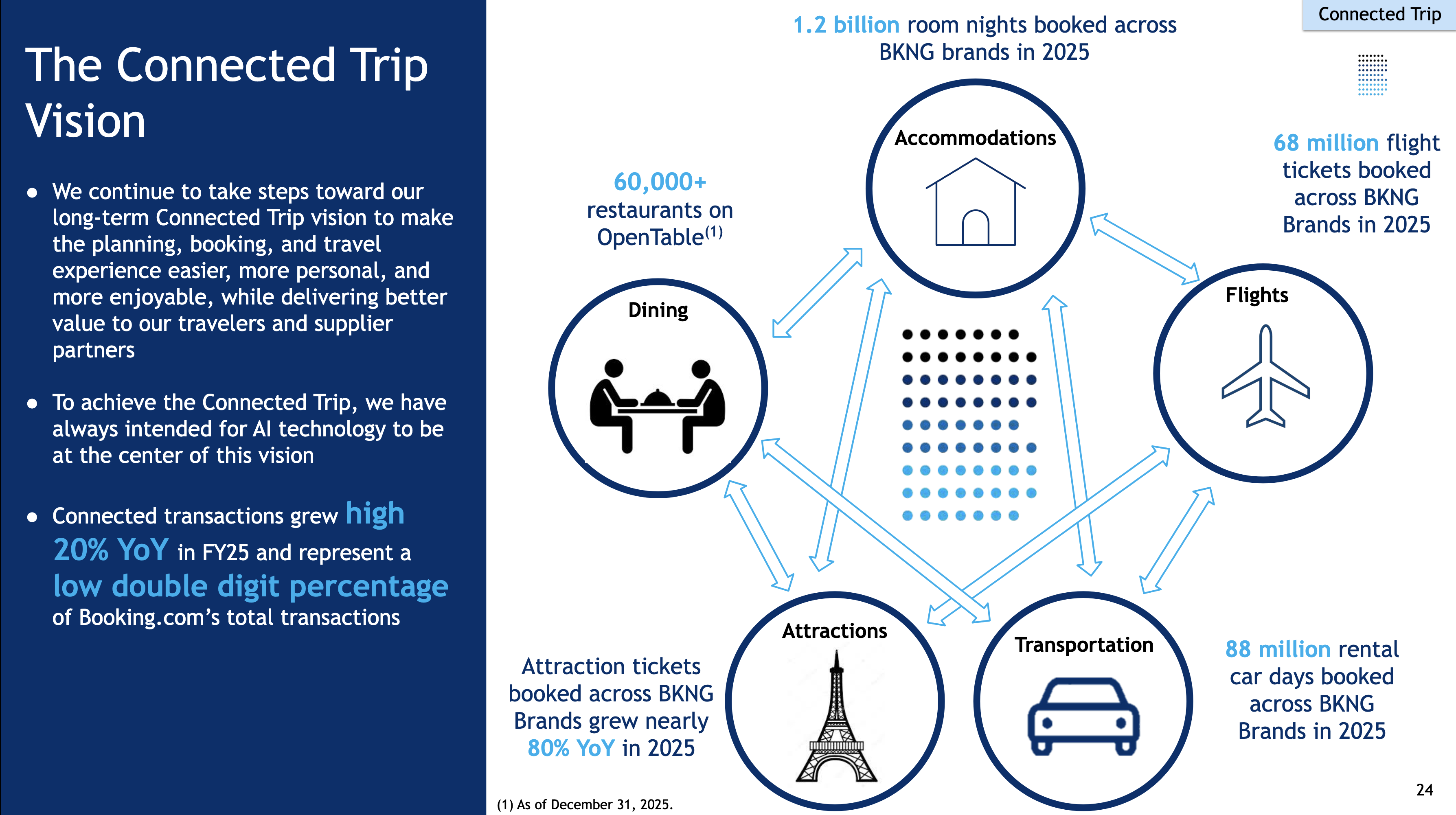
For a closer look at how the pieces fit together today, Timur Firsakov's breakdown of Booking's multi-product strategy is worth a read.
On cross-brand design
The hardest part of cross-brand work isn't the design. It's the negotiation. Every stakeholder comes with a different definition of "consistent." The key is building shared principles early and being willing to revisit them together when they get tested. 🤝