
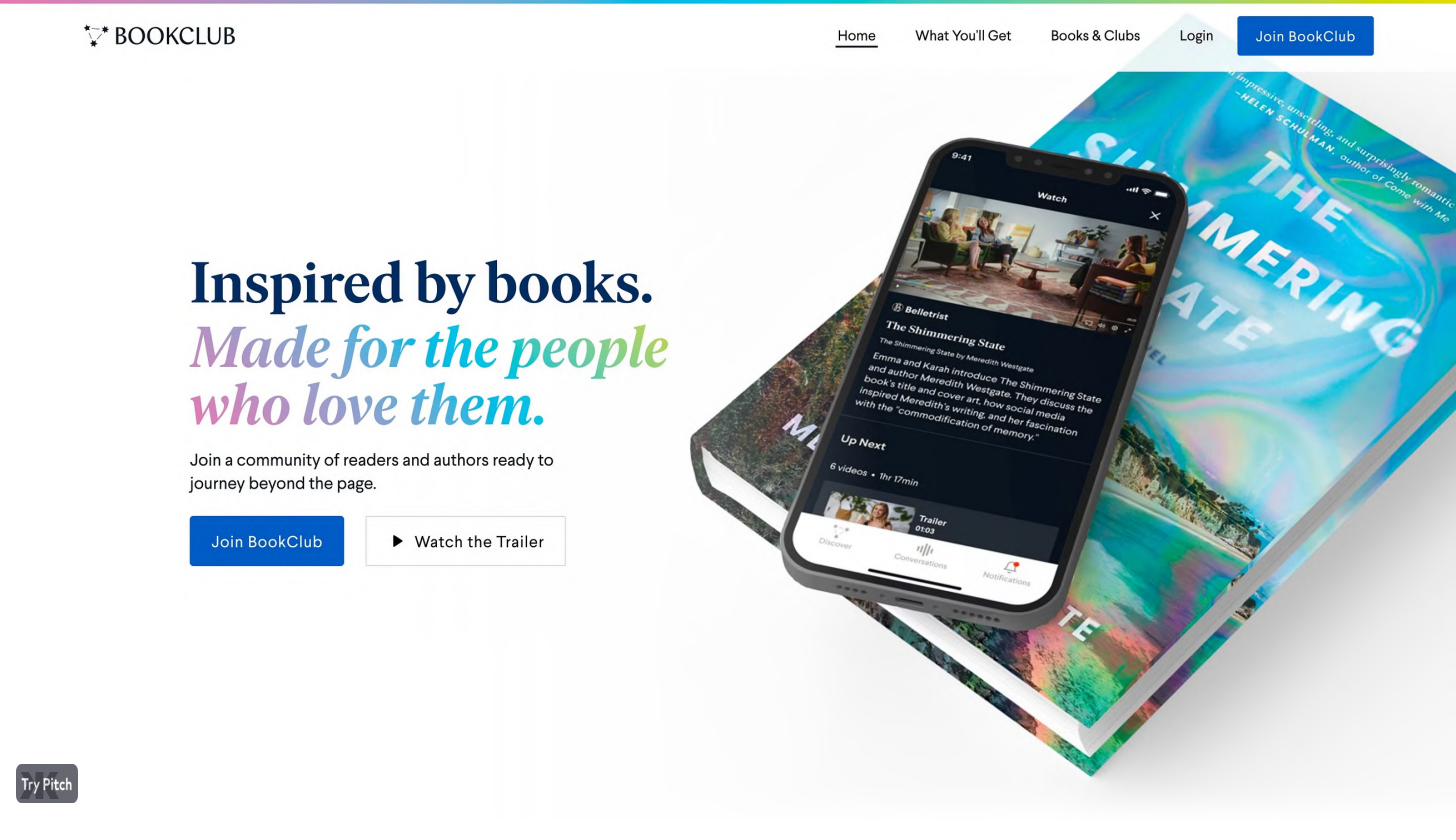
BookClub.com is a social reading platform that turns books into a shared experience. I joined as the founding product designer, responsible for the entire design function, from product concept through to launch.
Blank canvas, tight timeline
There was no design system, no research history, no existing product. Just a thesis: that reading is more interesting when it's social, and that the right product could make millions of people read more. My job was to make that thesis real in a product people would actually use.
Social reading wasn't a blank-canvas problem, though. Other teams had taken on the same challenge before us and have kept trying since, see this UX case study and this one as two of many. What we had that most attempts didn't was direct access to the people who already knew how to make an audience show up.
Designing the 0→1 experience
We started with a series of rapid generative research sessions: understanding how people already shared their reading lives informally (Instagram, Goodreads, book clubs) and what friction points those tools created. The patterns were clear: people wanted to share in context, not as a separate activity.
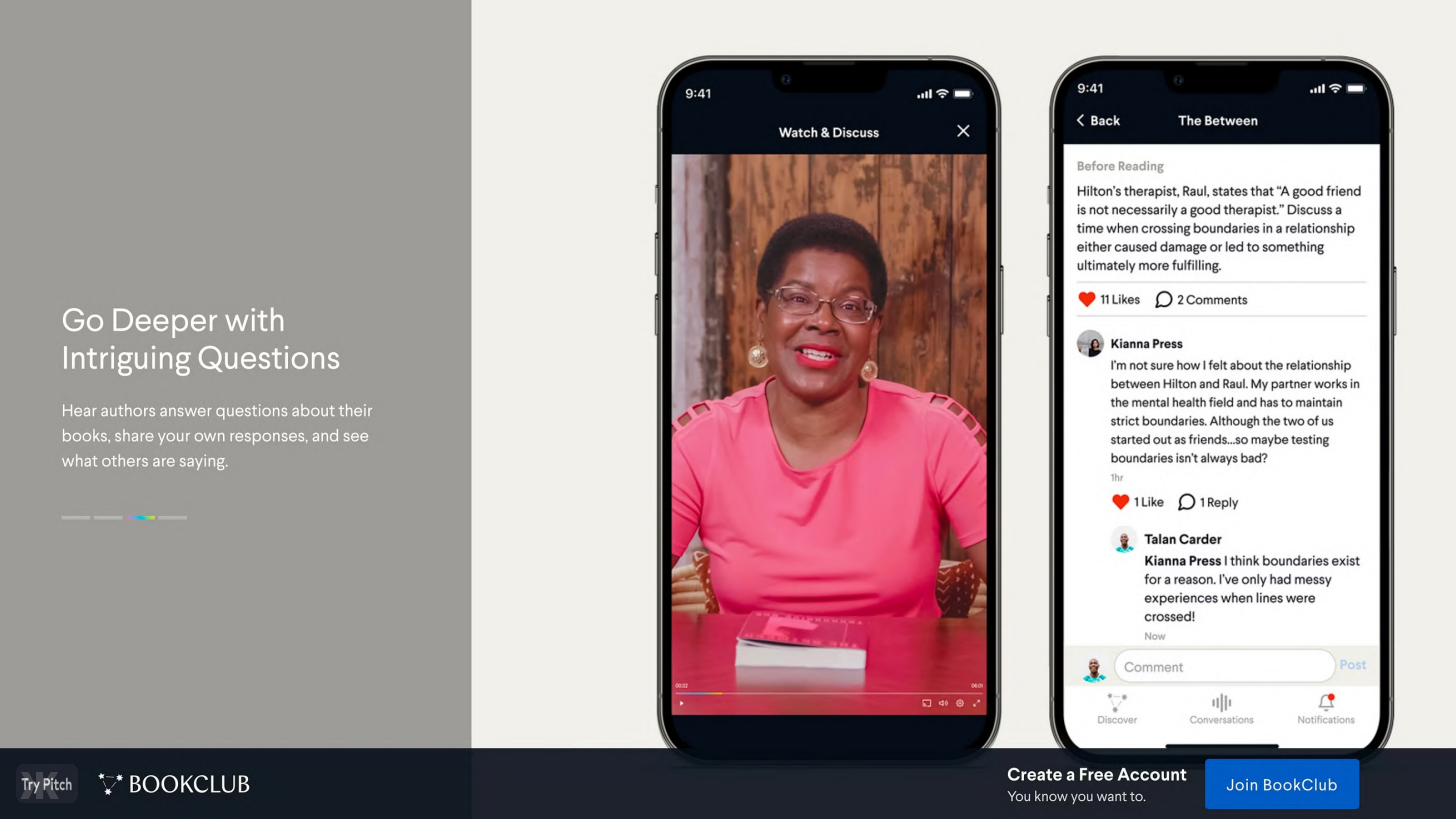
From research, we moved to a tight definition phase: three core primitives, the book feed, the reading room, and the annotation layer. Every feature decision came back to whether it strengthened one of these three things.
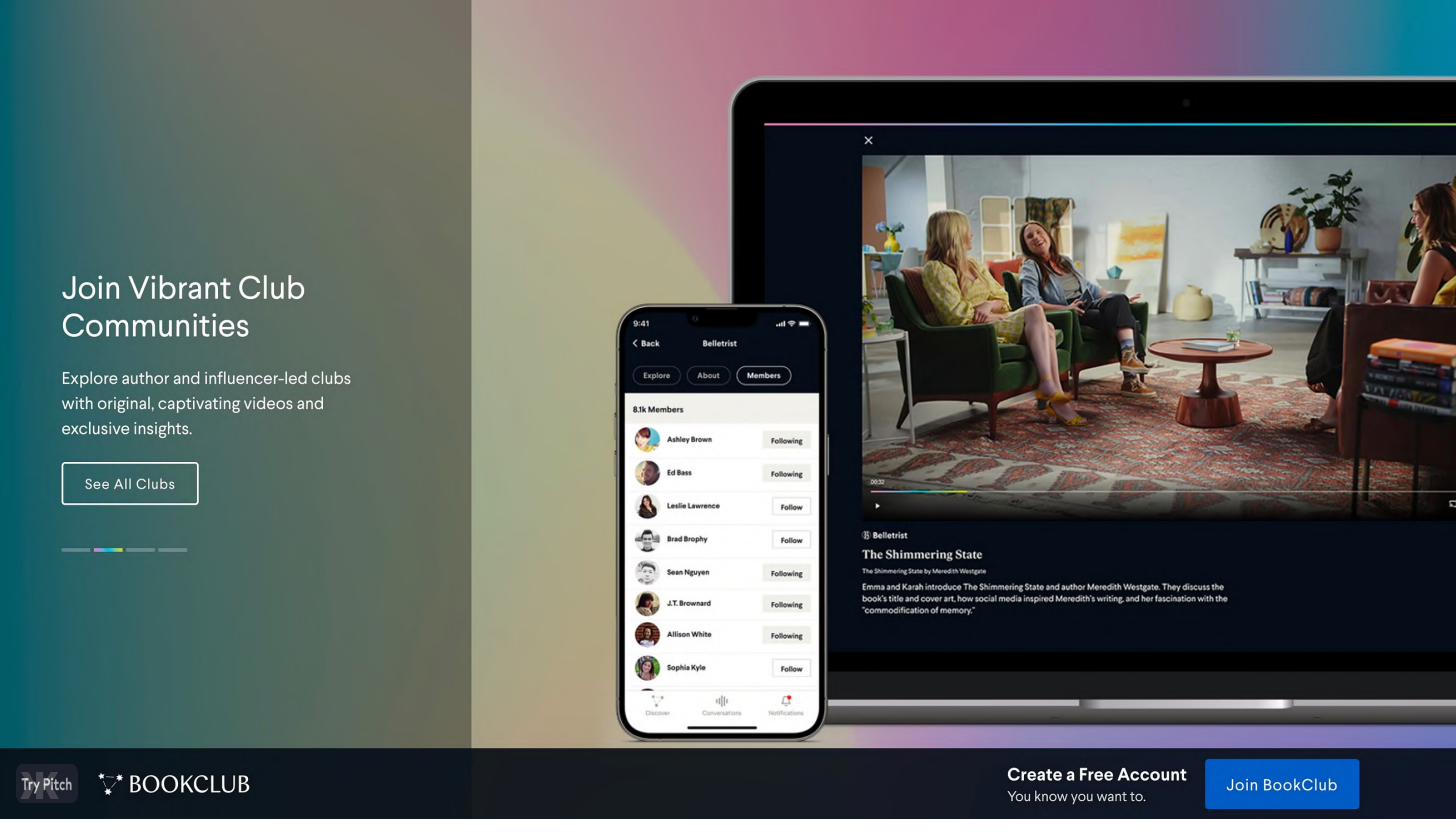
I built and iterated the full design end-to-end: brand, design system, mobile flows, web experience, and marketing site. The product launched to a waiting list of 50,000 readers in the first week.
Finding product-market fit alongside the cofounder
I worked closely with Emily Campbell, cofounder of BookClub.com, who directed our beta launch. She was vital to attracting thousands of organic signups. It started with Belletrist, the online book club actress and producer Emma Roberts founded in 2017 with her best friend Karah Preiss. From there it grew to celebrity facilitators including Barbara Corcoran, Hasan Minhaj, and Gary Vaynerchuk.
That relationship opened doors most social reading products never get near: authors, publishers, movie and TV production specialists, media writers, and filmmakers. Plus A-list celebrities who already knew how to hold an audience. We even worked with the team at Masterclass. Designing for that mix meant building tools flexible enough for a first-time author's book club and a Hollywood producer's fan community alike.
Together, Emily and I led product-market-fit discovery in that beta period. When she pivoted to Chief Content Officer, I took over design and research leadership, carrying the product forward on the foundation the beta had proven out.
One product became two businesses
After I moved on, the company split the platform into two businesses on the same foundation. BookClub stayed with consumer social reading, mostly fiction. Leadership IQ, a B2B professional development platform that turns the best business and leadership books into bite-sized "Sparks" teams can actually get through. Same instinct, that reading sticks better when it's social and bite-sized, aimed at two very different audiences.
On founding-stage design
Zero-to-one design teaches you to be ruthless about what matters. With no legacy to protect and no committee to satisfy, every decision is yours, which is exhilarating and terrifying in equal measure. 📚
The skill is moving fast without making decisions you'll regret scaling.